Refractory Training in South Africa: Day 1 of Our 2026 Training Programme
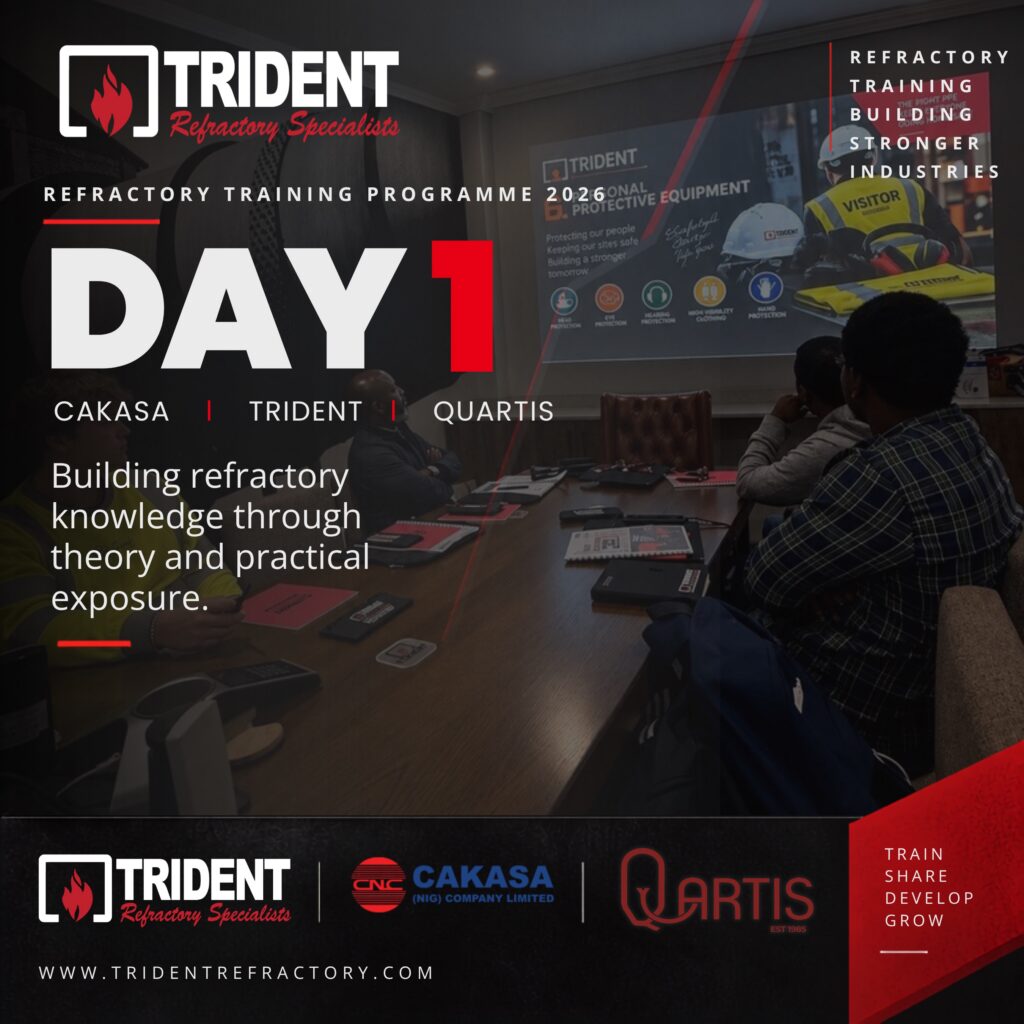
This week, Trident Refractory Specialists welcomed the CAKASA team to South Africa for the start of our 2026 Refractory Training Programme, presented in partnership with Quartis.
Led by Darryl James of Quartis, the programme is designed to combine technical understanding with practical exposure, because in the refractory industry, knowing the theory is only part of the job.
Starting With the Theory
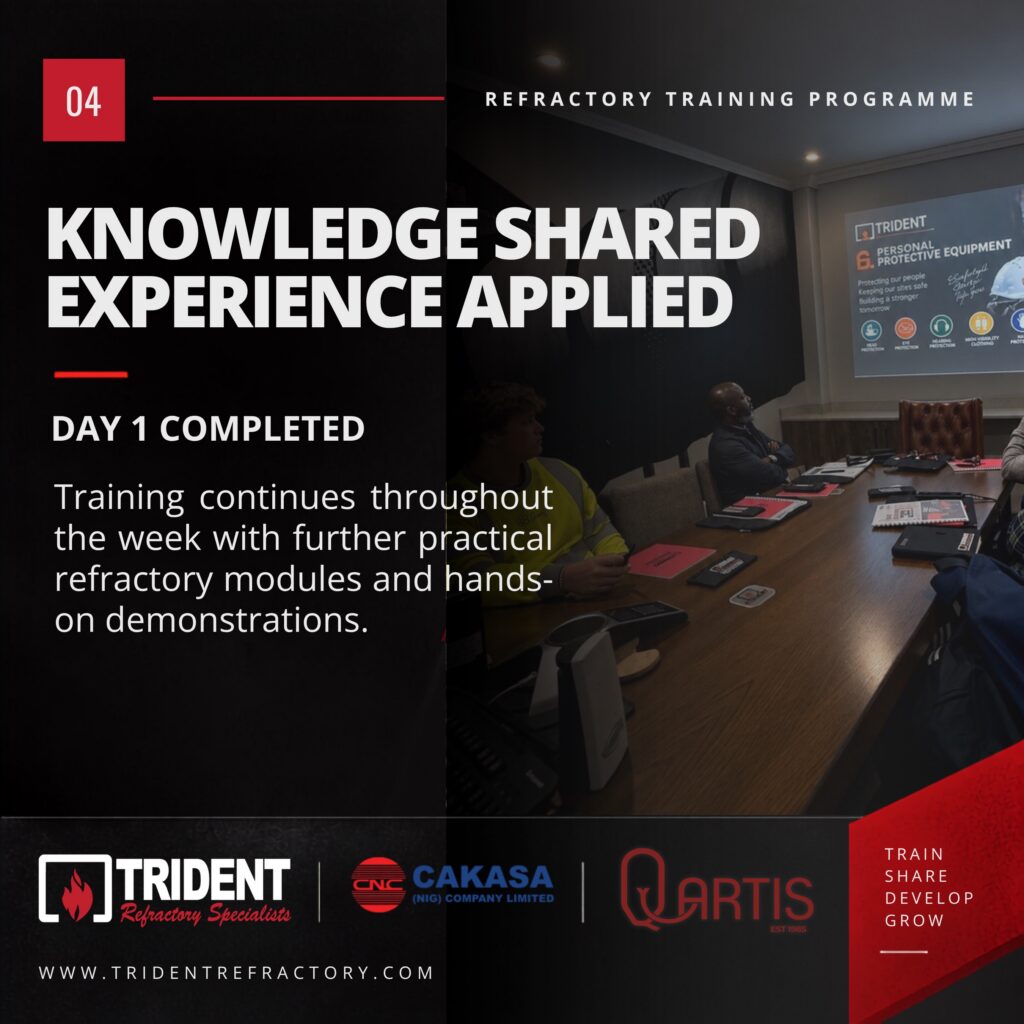
Day 1 began with the technical side of refractory work before the team headed into the workshop.
Establishing the theory first gives the team a better understanding of what they are working with, why different refractory systems and installation methods are used, and the practical considerations that need to be made when working in industrial environments.
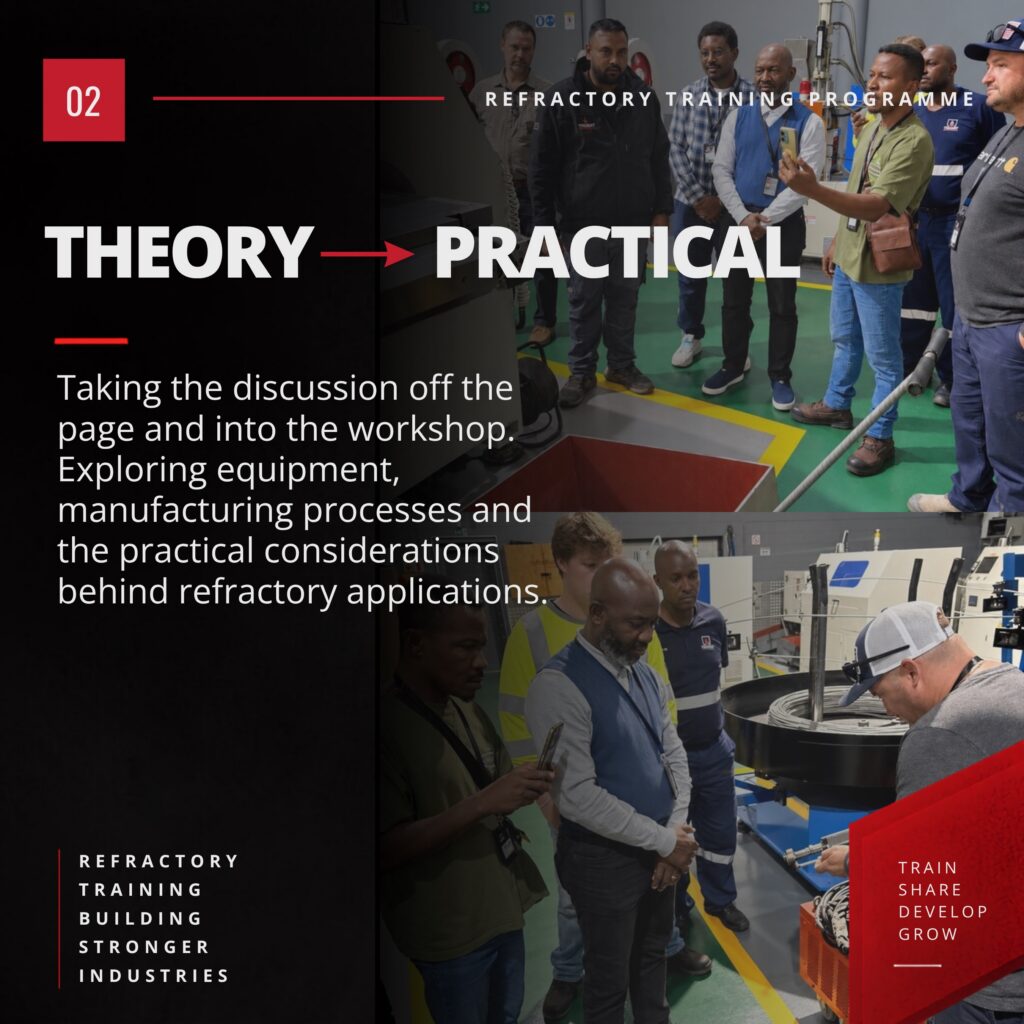
From there, it was time to get out of the training room and into the workshop.
From the Training Room to the Workshop
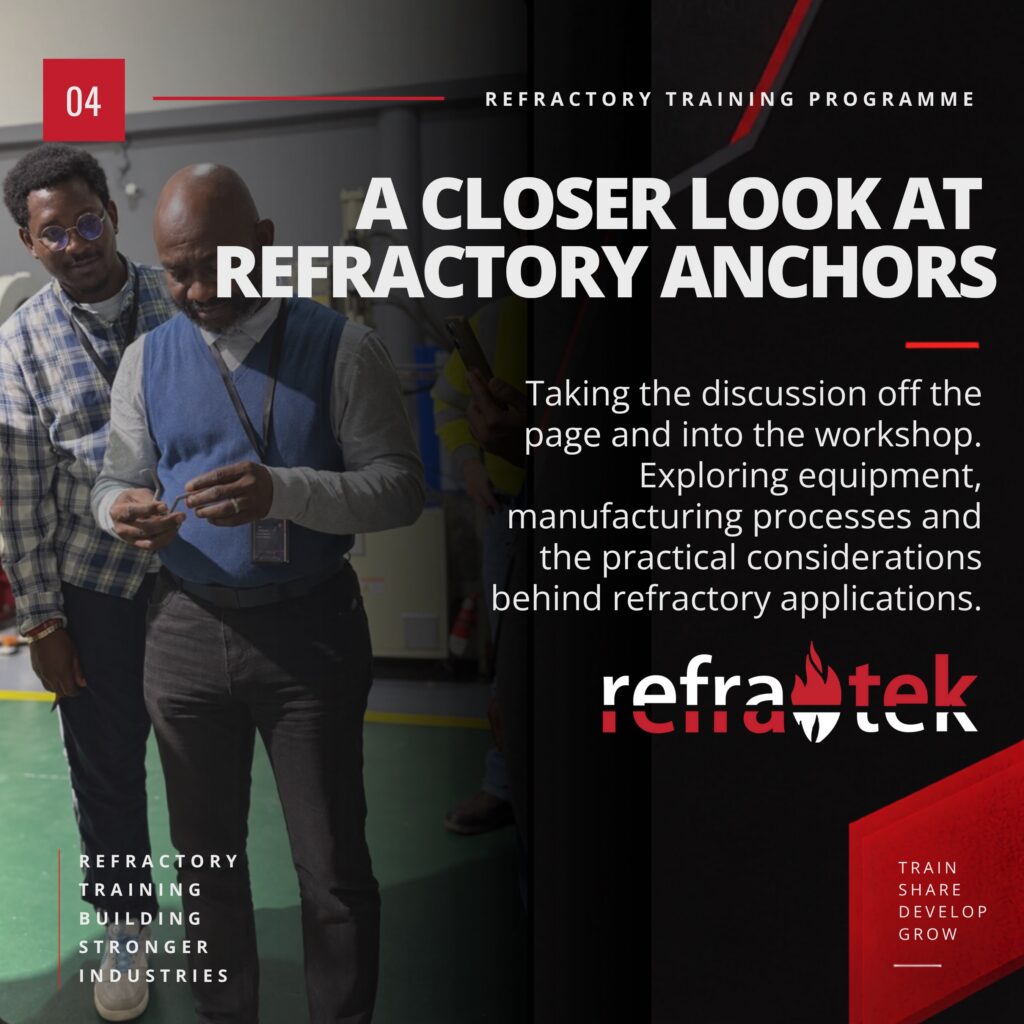
The team spent time looking at refractory equipment, refractory anchor manufacturing and the practical side of refractory installation.
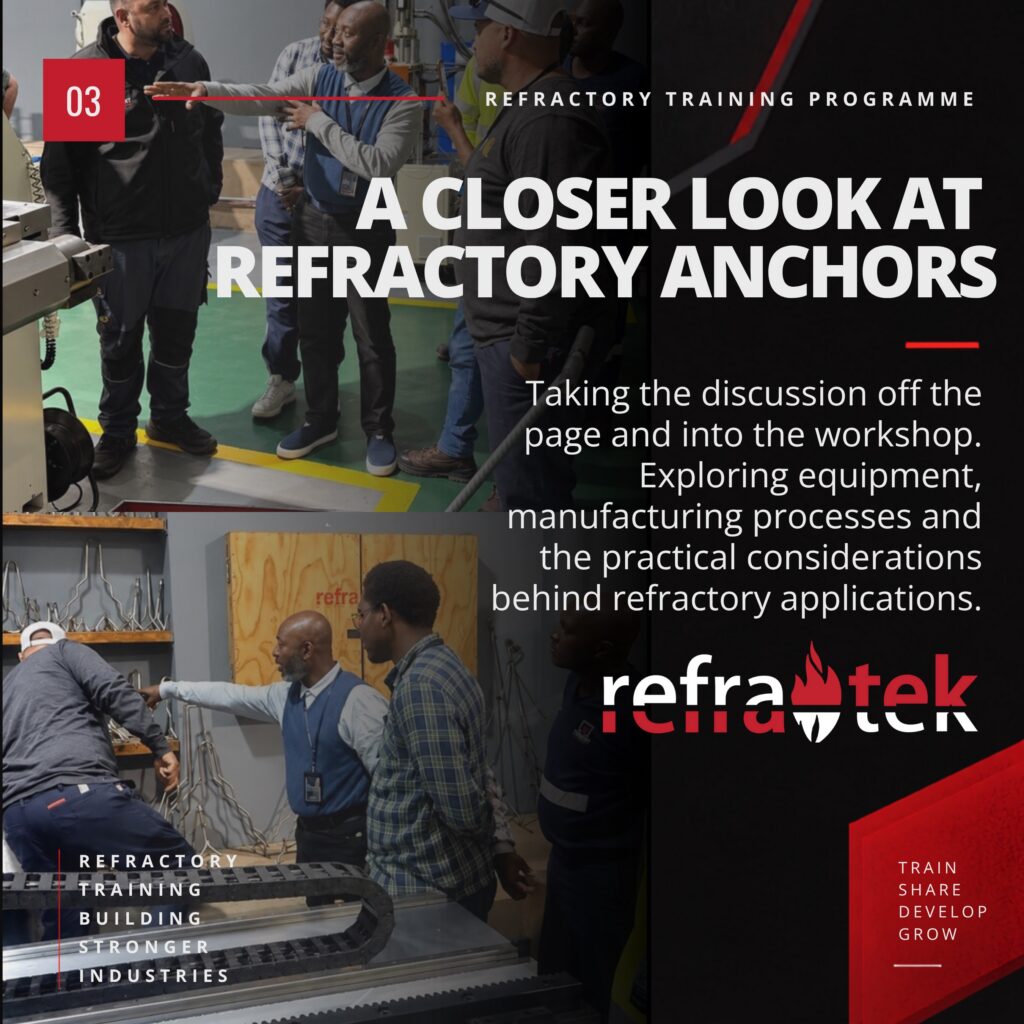
The team also spent time in the Refra-Tek Anchors workshop, a subsidiary of Trident, getting a closer look at our refractory anchor manufacturing capability, the equipment used and the different anchor configurations produced for refractory applications.
It also created an opportunity for questions, technical discussions and knowledge sharing between people with experience in different working environments.
For Trident, this is an important part of technical training. It shouldn’t simply be about presenting information. It should create an environment where people can ask questions, see the equipment and materials for themselves, and connect the theory to what actually happens on site.
Practical Refractory Knowledge
As the programme progresses, the focus will move increasingly towards hands-on training across different refractory installation methods and applications.
At Trident, we believe strongly in practical capability.You can understand the theory, but ultimately, you’ve got to be able to do the job.
That means understanding the materials, equipment and installation techniques, while also developing the practical skills needed to apply that knowledge correctly.
Day 1 laid the foundation for the week ahead.
A good start to the programme. Now for the hands-on work.